

UBER & LYFT ACCIDENT CLAIMS
Denver Rideshare Accident Lawyer
In an Uber or Lyft crash, the insurance can change before the car moves an inch.
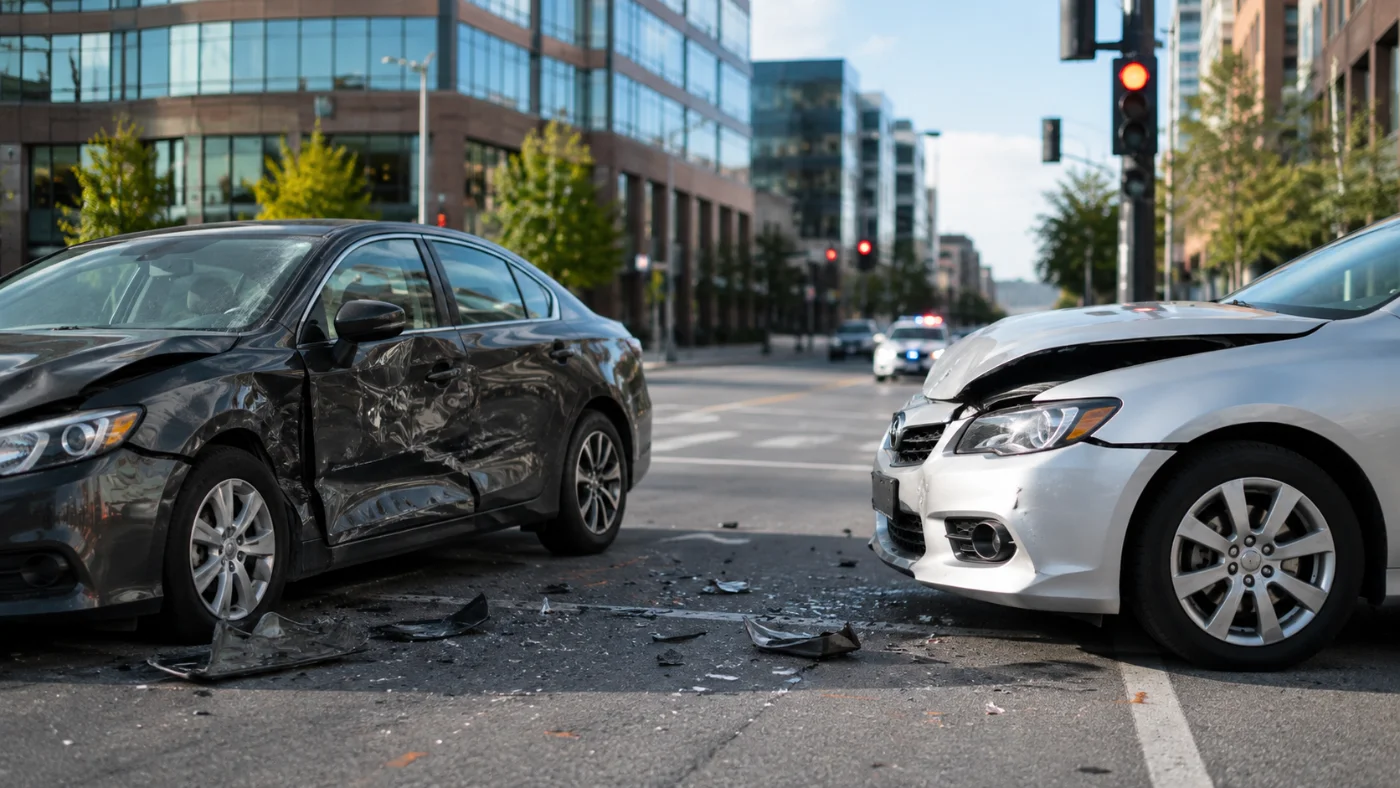
A driver can be in the same vehicle, on the same Denver street, carrying the same personal auto policy, and have a different insurance structure depending on what the app showed at the moment of impact.
Was the Uber or Lyft app off? Was the driver logged in and waiting? Had the driver accepted a ride and started toward the passenger? Was the passenger already in the car? Colorado law assigns different insurance requirements to those periods. The app status is therefore not background information. It is evidence.
Prove the Driving Error.
Rideshare status does not replace the ordinary liability analysis. A passenger can be injured because the Uber or Lyft driver caused the crash, because another driver did, or because responsibility is shared. Another motorist, pedestrian, or cyclist can be injured by a rideshare driver without ever using the app.
The evidence still includes photographs, witnesses, vehicle damage, traffic controls, surveillance, electronic vehicle data, phone information where relevant, and the applicable rules of the road. A crash leaving downtown Denver for I-25 is not legally different merely because the passenger ordered the car through an app.
What changes is the set of records and insurance layered on top of those facts.
Preserve the App History.
Colorado’s Transportation Network Company Act defines a “prearranged ride” by what happens inside the digital network. Under C.R.S. § 40-10.1-602(2), that period begins when the driver accepts a requested ride and ends when the rider leaves the vehicle.
That makes the platform record central. Ride-request and acceptance times, driver login status, pickup and drop-off data, GPS history, electronic receipts, and communications can establish exactly what the driver was doing when the collision occurred. Colorado law itself requires electronic receipts documenting the origin, destination, duration, and distance of completed prearranged rides.
Uber or Lyft may hold evidence that neither the injured person nor the investigating officer has. The company should be asked to preserve the relevant account, trip, and platform records before ordinary retention practices affect what remains available.
Match Status to Coverage.
Colorado does not impose one rideshare insurance limit from login through drop-off. C.R.S. § 40-10.1-604 changes the required coverage according to whether the driver is merely available or has accepted a prearranged ride.
When the App Is Off.
If the driver is not logged into the Uber or Lyft network, the special TNC coverage requirements do not apply merely because the person sometimes drives for a rideshare company. The driver’s ordinary automobile policy and any other applicable insurance govern, subject to their terms.
While Waiting for a Match.
Once the driver is logged into the digital network but has not accepted a ride, Colorado requires primary automobile coverage of at least $50,000 for injury to one person, $100,000 for injury to all people in one accident, and $30,000 for property damage. C.R.S. § 40-10.1-604(3).
This is the “available” period: the driver is working through the platform but has no accepted passenger request.
After a Ride Is Accepted.
Acceptance changes the coverage sharply. Colorado treats the accepted ride as beginning the prearranged ride even though the passenger has not yet entered the car. From acceptance until the passenger leaves the vehicle, the statute requires at least $1 million in primary liability coverage per occurrence. C.R.S. §§ 40-10.1-602(2), 40-10.1-604(2).
Colorado also requires the company to secure uninsured motorist protection for the driver and rider during a prearranged ride in amounts of at least $200,000 per person and $400,000 per occurrence. C.R.S. § 40-10.1-604(2.5).
While the Passenger Is Riding.
Pickup does not create another liability tier. The same prearranged-ride period that began when the driver accepted the request continues while the passenger is in the vehicle and ends when the passenger gets out. The $1 million primary liability requirement therefore applies both while the driver is en route to the pickup and while transporting the rider.
Auto Insurance and UM/UIM Claims addresses those issues separately and may provide an injured person with additional insurance coverage.
Check the Personal Policy.
A driver’s ordinary personal policy should not be assumed to cover rideshare activity. Colorado expressly provides that nothing in the TNC insurance statute requires a personal automobile policy to provide coverage while the driver is logged into a transportation network company’s digital network. C.R.S. § 40-10.1-604(5).
Colorado also requires these companies to warn prospective drivers that their personal automobile insurance may not provide liability coverage while they are operating on the platform. Some drivers purchase rideshare endorsements; others rely on the coverage supplied through the company. The actual policies have to be read rather than inferred from the Uber or Lyft logo on the vehicle.
Fix the Status Early.
A recorded statement after a rideshare crash can lock a person into assumptions about facts the app records can answer more reliably. An injured driver may say the Uber driver “had a passenger” because a person was seen in the back seat. The passenger may remember the driver saying another ride was waiting. Neither substitutes for the platform data.
The same problem affects early settlement discussions. Before valuing or releasing the claim, the applicable period, responsible drivers, company coverage, personal coverage, and any other available policies should be identified.
The injured person’s role matters too. A rideshare passenger may have rights under coverage tied to the prearranged ride. Another driver, pedestrian, or cyclist hit by a rideshare vehicle may instead depend on the driver’s liability coverage applicable to the precise app period. The same collision can therefore produce different coverage questions for different injured people.
Separate Driver From Platform.
Uber and Lyft do not use the traditional taxi-company model in which the company owns the vehicle and employs its driver. Colorado’s TNC Act expressly provides that a transportation network company is not deemed to own, control, operate, or manage the driver’s personal vehicle, and that a driver need not be an employee of the company. C.R.S. § 40-10.1-602.
That makes a claim against the driver different from a claim directly against Uber or Lyft. A platform is not automatically liable for every negligent act of every driver merely because the ride occurred through its app. At the same time, Colorado imposes statutory duties directly on these companies concerning their operations, drivers, vehicles, and insurance. Whether a claim exists against the company itself depends on the particular conduct and legal theory, not simply the “independent contractor” label.
Use the Three-Year Period.
Many Colorado tort claims for bodily injury arising from the use or operation of a motor vehicle are subject to the three-year limitations period in C.R.S. § 13-80-101(1)(n). That generally includes an injury claim arising from an Uber or Lyft motor-vehicle collision.
Different parties or claims can create different deadlines or notice requirements. The three-year period also does not determine how long Uber, Lyft, a driver, or another source will retain app data, surveillance, or electronic evidence. Legal time can remain after evidence time has run out.
Document Each Injury.
Rideshare crashes can produce the same physical injuries as other vehicle collisions, but causation still has to be established from the medical and factual record.
Traumatic brain injury requires separate attention. A traumatic brain injury may involve cognitive, behavioral, vestibular, or neurological changes even without dramatic conventional imaging findings.
Spinal cord injury, paralysis, amputation, severe burns, and other permanent physical impairment can require the future-care and earning-capacity analysis addressed in catastrophic injury claims. Fractures, disc injuries, joint damage, and other orthopedic conditions require their own medical, functional, and wage-loss proof.
Rex Legal Checks the App.
Rex Legal treats rideshare status as part of the liability and insurance investigation, not an administrative detail. Michael Rex remains directly involved in identifying the applicable Uber or Lyft period, preserving the platform evidence, reviewing the policies, and developing the injury claim.
Rideshare Accident Questions.
What should I do after an Uber or Lyft accident?
Document the crash and preserve the rideshare information. Save screenshots of the trip, driver information, ride receipt, app messages, photographs, witness information, and insurance details. Report the collision through the appropriate channels and get medical care when needed. The driver’s app status should be established early, because Colorado’s required insurance changes depending on whether the driver was waiting for a request or engaged in a prearranged ride.
Can I sue Uber or Lyft directly after a crash?
Possibly, depending on the facts and the legal theory. The rideshare driver’s negligence does not automatically establish liability against the platform itself. Colorado’s TNC statute recognizes that drivers need not be employees and that these companies do not automatically control the driver’s personal vehicle. A direct claim can require evidence about the company’s own conduct, its statutory obligations, or its relationship with the driver.
What insurance applies if an Uber or Lyft driver was waiting for a ride?
When the driver is logged into the digital network but has not accepted a ride, C.R.S. § 40-10.1-604(3) requires primary coverage of at least $50,000 for one injured person, $100,000 for all injured people in one accident, and $30,000 for property damage. That period ends when the driver accepts a ride request and the higher prearranged-ride coverage begins.
What insurance applies if I was an Uber or Lyft passenger?
Colorado treats the trip as a prearranged ride from the moment the driver accepts the request until the passenger leaves the vehicle. During that period C.R.S. § 40-10.1-604 requires at least $1 million in primary liability coverage per occurrence, plus statutory uninsured motorist protection of at least $200,000 per person and $400,000 per occurrence. Which coverage pays still depends on who caused the collision.
What if an Uber or Lyft driver hit me while I was in my own car?
Your claim against the rideshare driver still depends on fault, but the driver’s app status determines the minimum coverage the company must carry. Waiting for a ride carries one statutory tier; accepting a ride triggers the $1 million prearranged-ride requirement. Your own applicable insurance may also matter. Auto Insurance and UM/UIM Claims addresses those issues separately and may provide an injured person with additional insurance coverage.
Does the rideshare driver’s personal auto insurance cover the crash?
It may or may not. Colorado law does not require a personal auto policy to cover a driver while logged into a transportation network company’s network, and the state requires these companies to warn drivers that their personal policy may not provide liability coverage during platform use. A rideshare endorsement can change the analysis. The policy language and the driver’s app status both need to be checked.
How do I prove an Uber or Lyft driver was logged into the app?
Platform records can establish it. Relevant evidence includes login history, ride requests, acceptance timestamps, GPS data, pickup and drop-off records, electronic receipts, and communications associated with the trip. Colorado law also requires a transportation network company to cooperate with another insurer during a coverage investigation by providing relevant dates and times when an incident involved a driver logged into the network.
How long do I have to file an Uber or Lyft accident lawsuit in Colorado?
Many bodily-injury tort claims arising from the use or operation of a motor vehicle have a three-year limitations period under C.R.S. § 13-80-101(1)(n). Other claims, parties, or circumstances can create different requirements. The filing period should not be confused with evidence preservation: app history, surveillance, vehicle data, and other electronic evidence can become unavailable well before a lawsuit would otherwise be untimely.
Tell Us What Happened.
If you were injured in an Uber or Lyft crash, Michael Rex can determine which app period applied, what coverage was in force, what platform evidence should be preserved, and who may be legally responsible. Available 24 hours a day, 7 days a week.