

CAR ACCIDENT CLAIMS
Denver Car Accident Lawyer
A car crash can be simple to describe and difficult to prove.
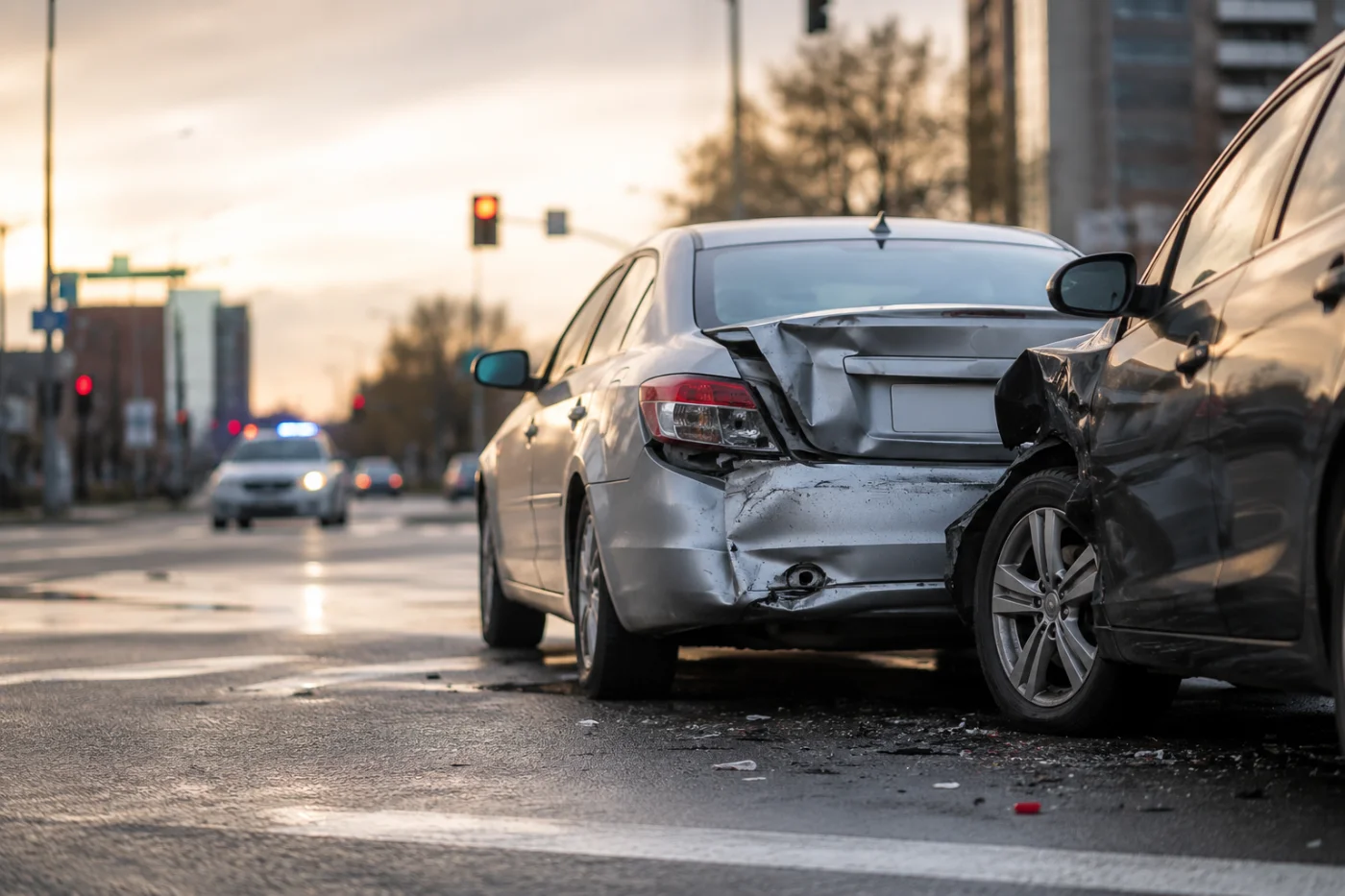
A rear-end crash on I-25, an intersection collision on a Denver surface street, and a chain-reaction wreck during a Colorado snowstorm present different facts. The same questions come first. Who had the right of way? What was each driver doing in the seconds before impact? What evidence still exists? Did the crash cause the medical condition being claimed? What insurance applies?
The collision tells part of the story. The claim depends on what can be proved.
Responsibility Comes First.
Colorado uses a fault-based system for motor-vehicle injury claims. Before damages matter, responsibility has to be established. A traffic citation or police report may be useful, but neither replaces the underlying evidence.
That evidence can include scene photographs, witness statements, 911 recordings, traffic-camera footage, nearby business surveillance, vehicle damage, phone records, event data recorder information, and testimony about lane position, following distance, speed, signals, and right of way. A multi-vehicle crash requires an additional step: separating what each driver did and determining whether more than one person contributed to the collision.
Colorado’s modified comparative negligence statute makes that analysis important. Under C.R.S. § 13-21-111, a claimant’s damages are reduced in proportion to the claimant’s own negligence. Recovery is barred when the claimant’s negligence is as great as or greater than the negligence against which recovery is sought. In a typical two-driver case, a 50% fault finding can prevent recovery.
Preserve the Evidence.
Some of the best evidence in a crash case is temporary. Surveillance systems overwrite footage. Dash-camera files are deleted. Witnesses become harder to locate. Vehicles are repaired, sold, salvaged, or destroyed. Tire marks, debris, and roadway conditions change.
The vehicles themselves can matter. Many modern vehicles contain event data recorders that preserve information about the seconds surrounding a collision. Depending on the vehicle and event, that information can include speed, braking, throttle input, seat-belt status, or change in velocity. It can help test competing accounts of how a crash occurred.
That evidence has to exist before anyone can use it. Early investigation is partly an exercise in preservation: identify what matters, determine who has it, and act before it disappears.
Find the Coverage.
Colorado law requires motor vehicles operated on public highways to carry complying liability coverage. C.R.S. §§ 10-4-619 and 10-4-620. The statutory minimums are $25,000 for bodily injury or death to one person, $50,000 for bodily injury or death to all people in one crash, and $15,000 for property damage.
Those numbers explain why identifying all available coverage matters. A driver can comply with Colorado law and still carry too little liability coverage for a crash involving serious injury, substantial medical treatment, extended wage loss, or several injured people.
The liability policy covering the at-fault driver or vehicle is one place to start, not always the end of the analysis. Coverage questions become more complicated when a driver was using someone else’s vehicle, driving for work, or when several policies or responsible parties are involved. Commercial truck accidents and rideshare accidents raise additional issues addressed on their dedicated pages.
If the responsible driver has no insurance or not enough insurance, the injured person’s own uninsured or underinsured motorist coverage may provide another source of recovery depending on the policy and facts. Auto Insurance and UM/UIM Claims addresses those issues separately and may provide an injured person with additional insurance coverage.
Early Decisions Matter.
The first weeks after a crash can produce decisions that stay with the claim. An adjuster may request a recorded statement before the injured person has seen the crash report, reviewed photographs, spoken with witnesses, or understood the extent of the injury.
The recording creates a fixed account. Adjusters can compare later testimony, medical histories, or descriptions of the crash against that statement and use differences to dispute liability, causation, or credibility. That does not make every recorded statement improper. It makes the purpose, timing, and obligation to give one important.
An early settlement offer raises a different issue. It can arrive before treatment is complete, before a physician has given a prognosis, or before the full effect on work and daily activity is known. Accepting a settlement ordinarily requires a release of the claims covered by the agreement. Later medical information generally does not undo that release.
The question is not whether an offer came quickly. The question is whether enough is known to make an informed decision about what is being released.
Deadlines Are Different.
Colorado gives many tort claims arising from the use or operation of a motor vehicle a three-year limitations period under C.R.S. § 13-80-101(1)(n). Colorado’s general statute gives many other tort claims a two-year period under C.R.S. § 13-80-102(1)(a), which expressly excludes the motor-vehicle claims covered by § 13-80-101(1)(n).
The three-year period is not universal. Claims involving governmental entities, different causes of action, particular defendants, or other special circumstances can carry separate notice requirements or deadlines. The correct deadline depends on the claim, the parties, and when the cause of action accrued.
A filing deadline is also not a preservation deadline. Waiting can cost evidence long before it costs the right to file suit.
Causation Is Separate.
Proving that another driver caused a collision does not prove that every later medical condition was caused by that collision. Causation is a separate part of the case.
Medical records often become central. The timing of symptoms, emergency treatment, diagnostic imaging, specialist evaluations, prior similar complaints, treatment gaps, work restrictions, and the course of recovery all help define the medical story. Depending on the injury, physician testimony or other expert analysis may be necessary to explain what changed because of the crash and what did not.
That distinction becomes especially important when an insurer points to a preexisting condition or argues that treatment is unrelated. A preexisting condition does not automatically defeat a claim. The medical evidence has to distinguish the condition that existed before the crash from any new injury or aggravation caused by it.
Claims involving a traumatic brain injury or catastrophic injury require additional medical and damages analysis. Those issues are addressed on their dedicated pages.
One Lawyer, Start to Finish.
Rex Legal handles the liability evidence, the insurance analysis, and the medical record as parts of the same case rather than as separate files. Michael Rex remains directly involved from evaluation through resolution.
Common Questions About Car Accidents.
How long do I have to file a car accident lawsuit in Colorado?
Many Colorado tort claims arising from the use or operation of a motor vehicle have a three-year limitations period under C.R.S. § 13-80-101(1)(n). Many other tort claims have a two-year period. The three-year rule is not universal, and separate notice requirements or deadlines can apply depending on the defendant, the claim, and the circumstances.
What happens if I was partly at fault for the crash?
Colorado uses modified comparative negligence. Under C.R.S. § 13-21-111, damages are reduced according to the injured person’s share of negligence. Recovery is barred when that negligence is as great as or greater than the negligence against which recovery is sought. In a typical two-driver case, a 50% fault finding can prevent recovery.
Do I have to give the other driver’s insurance company a recorded statement?
Usually, an injured person has no contractual duty to give the other driver’s liability insurer a recorded statement. Your own policy is different and may impose cooperation duties. Before giving a statement, identify who is requesting it, whether you have an obligation to provide it, and how the recording can later be used in evaluating the claim.
Should I accept an early settlement offer after a car accident?
Only after understanding what is being released and what is known about the injury. An early offer can arrive before treatment is complete, the prognosis is clear, or the full effect on work and daily life is known. A settlement ordinarily requires a release, and later medical developments generally do not reopen claims covered by that release.
What if the other driver does not have enough insurance?
Other coverage may still apply. Uninsured or underinsured motorist coverage, described in more detail on the Auto Insurance and UM/UIM Claims page, can provide benefits when the responsible driver has no insurance or insufficient liability coverage. Whether it applies depends on the policy and the facts of the crash.
What evidence should I save after a car accident?
Preserve photographs and video of the scene and vehicles, witness contact information, dash-camera footage, insurance information, repair or total-loss records, medical records, and documents showing missed work or other claimed losses. In a disputed or serious collision, the vehicles themselves, nearby surveillance, and event data recorder information may also need to be preserved before they disappear.
Can I still have a claim if the police report says I was at fault?
Possibly, depending on the evidence. A police report can matter, but it does not by itself determine civil liability. The officer may not have witnessed the collision. Photographs, video, witness testimony, vehicle data, physical evidence, and the applicable traffic rules can support a different conclusion about how the crash occurred and who was responsible.
What happens after a hit-and-run accident?
A hit-and-run creates both an investigation problem and a coverage question. Preserve photographs, witness information, nearby surveillance, debris, plate information, and any other evidence that could identify the vehicle or document the crash. If the driver cannot be identified or has no available insurance, uninsured motorist coverage may apply depending on the policy and circumstances.
Tell Us What Happened.
If you were injured in a car crash, Michael Rex can review what happened, what evidence may matter, and what insurance may apply. Available 24 hours a day, 7 days a week.