

PROPERTY INSURANCE CLAIMS
Denver Property Insurance Claim Lawyer
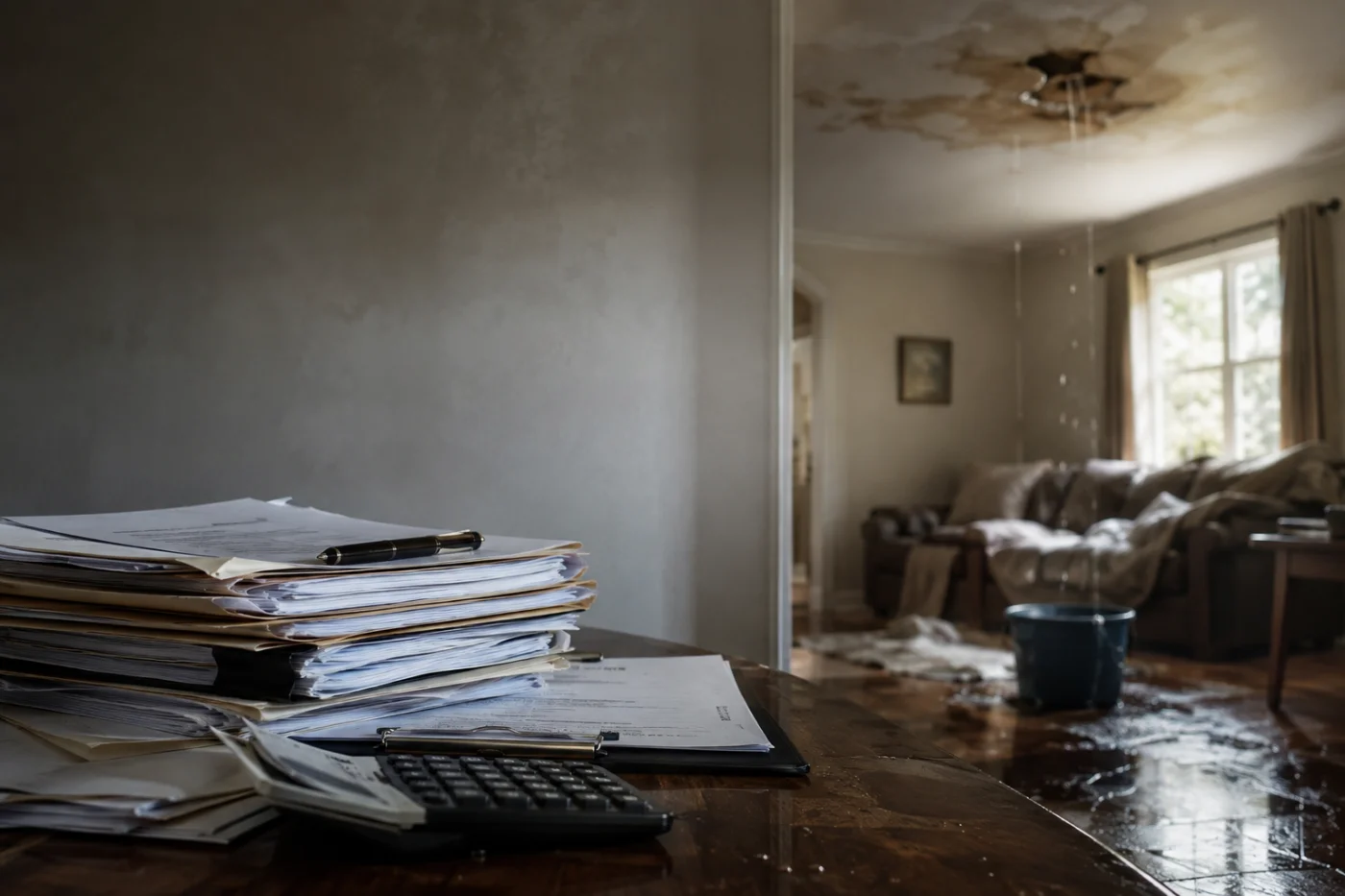
A property claim can be covered and still leave the policyholder unable to make the repair.
That problem is common after Colorado hailstorms. The insurer may agree that the roof was damaged but disagree about how much must be replaced, what materials are required, whether depreciation is recoverable, or whether code upgrades belong in the estimate.
Wildfire claims create the same problem at a different scale. Coverage is only the first question. The policy still has to be translated into an actual scope, payment structure, and timetable for rebuilding.
Read the Payment Structure.
Actual cash value and replacement cost are not the same promise. Actual cash value generally reflects the covered property’s value after depreciation. Replacement-cost coverage is designed to pay the covered cost of repair or replacement without permanently deducting that depreciation, subject to the policy’s conditions and limits.
Many replacement-cost policies pay an initial actual-cash-value amount and hold back depreciation until the insured actually repairs or replaces the property. Colorado defines “recoverable depreciation” as the difference between replacement cost and actual cash value. C.R.S. § 10-4-110.8.
That creates a practical problem. A roof may cost more to replace than the policyholder receives up front. Contractors still require payment. The insured may have to fund part of the work before the carrier releases the withheld depreciation.
The declarations page, loss-settlement provision, endorsements, deductible, payment schedule, and repair deadlines all matter. A policy labeled “replacement cost” does not mean every dollar is payable before work begins.
Define the Repair Scope.
Hail disputes on the Front Range are often scope disputes. The insurer may approve several damaged shingles or one roof slope. The contractor may say the roof cannot be repaired properly without replacing more.
Matching is one example. Colorado does not impose a blanket rule requiring an insurer to replace every undamaged roof, siding, or painted surface merely to achieve a perfect match. The issue usually turns on the policy language, whether like-kind-and-quality material remains available, whether a partial repair is technically possible, and whether code requirements expand the necessary work.
Building-code upgrades raise a separate coverage question. New decking, ventilation, electrical work, ice barriers, or other changes may be required before damaged property can be repaired under current code. “Ordinance or law” coverage addresses specified increased costs caused by enforcement of building laws. For qualifying replacement-cost homeowner policies, Colorado requires insurers to offer ordinance-or-law coverage equal to at least twenty percent of the dwelling limit and extended replacement-cost coverage of at least fifty percent, unless the policy already includes qualifying coverage. C.R.S. § 10-4-110.8.
An estimate difference can therefore conceal several different disputes: what was physically damaged, what must be replaced to repair it, what code requires, and which parts of that cost the policy covers.
Use Appraisal Deliberately.
Many property policies contain an appraisal clause for disagreements about the amount of loss. The usual structure gives the insurer and the insured separate appraisers, with an umpire available when the appraisers cannot agree.
Appraisal can resolve a valuation dispute without trying the entire insurance case. Depending on the policy language, appraisal can reach factual questions about the amount of damage, repair scope, and sometimes causation. It does not rewrite the insurance contract or automatically resolve every legal coverage issue.
Invoking appraisal is therefore not a neutral administrative step. It can narrow a dispute efficiently, but it also commits important factual issues to the appraisal process and creates additional expense. Before demanding appraisal, the policyholder should know what issue is actually disputed and what the clause permits the panel to decide.
Test the Coverage Defense.
Property denials frequently turn on causation. A carrier may attribute roof deterioration to age, wear and tear, installation problems, or long-term exposure rather than hail. A water claim may involve both a covered event and an excluded source. Policies can also contain cosmetic-damage exclusions or endorsements limiting payment for damage that affects appearance without impairing function.
None of those labels decides the claim by itself. The insurer’s conclusion has to be compared with the policy language and the physical evidence: photographs, weather data, engineering or contractor observations, prior-condition evidence, repair history, and the timing and pattern of the damage.
Late notice and failure to protect the property from further damage can create additional coverage disputes. So can failure to cooperate. The consequences depend on the policy, the nature of the failure, and applicable Colorado law. A policyholder should not assume that a late report automatically destroys coverage, or that policy duties can safely be ignored.
Document the Wildfire Loss.
Colorado law gives homeowners additional protections after certain catastrophic wildfire losses. C.R.S. § 10-4-110.8 contains special rules when an owner-occupied residence is a total loss from a wildfire disaster declared by the governor.
For those qualifying losses, additional living expense coverage must be available for at least twenty-four months, with the opportunity for two further six-month extensions where good-faith reconstruction is delayed by permitting or rebuilding circumstances beyond the policyholder’s control. The statute also allows additional time from the insurer’s initial actual-cash-value payment to submit dwelling replacement receipts, with similar potential extensions for qualifying delays.
Contents receive special treatment too. After a qualifying declared-wildfire total loss of a furnished owner-occupied residence, the insurer must offer at least sixty-five percent of the contents limit without requiring a written inventory. An inventory can still support additional covered payment. Most policyholders never learn this, and compiling a room-by-room inventory of a destroyed home is one of the most punishing parts of a wildfire claim.
Smoke, soot, and ash can create their own scope dispute. The carrier may propose cleaning while the homeowner contends that materials or contents cannot be restored safely. There is no simple statutory rule requiring replacement of every smoke-exposed item, so the property condition, testing, remediation evidence, and policy language all matter.
Meet the Policy Duties.
The policy imposes duties on the policyholder as well as the insurer. Common provisions require prompt notice, reasonable steps to protect the property from additional damage, inventories or supporting records, cooperation with the investigation, and a signed proof of loss when requested.
A carrier may also request an examination under oath. That is formal sworn questioning conducted under the policy, usually concerning the loss, ownership, damages, finances, documents, or other issues the insurer considers relevant to coverage. It is different from a casual adjuster interview.
Those requests should be taken seriously. Failing to provide required information, ignoring a proof-of-loss deadline, disposing of damaged property, or refusing a contractually required examination can create a separate dispute even when the original loss was covered.
Track the Correct Clock.
Different property claims can carry different deadlines. A Colorado breach-of-contract action is generally subject to the three-year period in C.R.S. § 13-80-101(1)(a), but accrual still has to be determined from the particular dispute.
For homeowner policies, Colorado provides an important protection. C.R.S. § 10-4-110.8 prevents a homeowner policy issued or renewed on or after January 1, 2014 from requiring suit within a period shorter than the otherwise applicable statute of limitations. A clause printed in a homeowner policy should therefore not simply be assumed to shorten Colorado’s statutory period.
Commercial property policies and other forms of coverage require separate review. So do statutory or common-law claims concerning how the insurer handled the loss. Insurance disputes and bad faith addresses those separate claims and standards.
Auto Insurance and UM/UIM Claims addresses first-party automobile coverage rather than damage to a home or other property.
Rex Legal Reads the Policy.
Rex Legal starts with the policy, the carrier’s estimate, the policyholder’s evidence, and the exact point where the two diverge. Michael Rex remains directly involved in evaluating coverage, repair scope, appraisal, claim duties, and any separate insurer-conduct issues.
Property Insurance Questions.
What should I do if my insurance company underpaid my roof claim?
Compare the carrier’s estimate with the actual damage and the policy before treating the payment as final. Look at which slopes and components were included, labour and material pricing, matching issues, code-required work, deductible treatment, depreciation, and any exclusions or endorsements. A contractor’s estimate can help identify missing scope, but the policy determines which repair costs are covered.
What is recoverable depreciation?
Recoverable depreciation is the difference between replacement cost and actual cash value. Under many replacement-cost policies, the insurer initially subtracts depreciation and releases that amount after the covered property is actually repaired or replaced and the policy’s conditions are satisfied. Colorado expressly defines recoverable depreciation in C.R.S. § 10-4-110.8. The policy should be checked for the documentation and timing required to recover it.
What is insurance appraisal, and should I invoke it?
Appraisal is a policy procedure for resolving specified disputes about the amount of a property loss. Each side ordinarily selects an appraiser, and an umpire can resolve disagreements. Whether to invoke it depends on what is disputed. Appraisal can efficiently resolve valuation or scope issues, but it can also commit important factual questions to the panel and does not necessarily decide legal coverage. The actual appraisal clause should be read first.
Does a cosmetic-damage exclusion defeat a hail claim?
Not necessarily. A cosmetic-damage endorsement can limit coverage when hail changes appearance without causing the kind of functional damage the policy covers. The first questions are whether the endorsement actually applies to the damaged component and what the physical evidence shows. Hail that fractures, punctures, compromises function, or causes other covered physical damage presents a different issue from appearance alone.
What if the insurer says my roof damage is wear and tear instead of hail?
The cause has to be proved from the evidence. Roof age can matter, but age does not establish that every condition resulted from deterioration. Photographs, storm data, inspection findings, damage patterns, prior roof condition, repair history, and expert or contractor evidence can help distinguish storm damage from ordinary wear. The insurer’s wear-and-tear exclusion must also be compared with the specific loss being claimed.
What coverage applies after a Colorado wildfire?
The policy can include dwelling coverage, contents, debris removal, additional living expenses, extended replacement cost, and ordinance-or-law coverage. Colorado provides additional protections after certain governor-declared wildfire disasters involving total losses of owner-occupied residences, including at least twenty-four months of additional living expense coverage, potential extensions, additional time to recover replacement costs, and a minimum sixty-five-percent contents offer without a written inventory. C.R.S. § 10-4-110.8.
What is an examination under oath?
An examination under oath is formal sworn questioning requested under an insurance policy. The insurer may ask about how the loss occurred, the damaged property, documents, prior claims, ownership, expenses, or other matters relevant to its investigation. It is not simply an informal call with an adjuster. If the policy requires one, refusing or mishandling the request can create a separate coverage issue.
How long do I have to sue over a Colorado property insurance claim?
The answer depends on the claim and the policy. Colorado contract actions are generally subject to a three-year limitations period, but accrual and other claims require separate analysis. For homeowner policies issued or renewed since January 1, 2014, C.R.S. § 10-4-110.8 prohibits a contractual suit period shorter than the otherwise applicable statute of limitations. Commercial property policies and separate bad-faith claims can involve different rules.
Tell Us What Happened.
If your property insurer has denied, delayed, or underpaid a hail, wildfire, water, or other covered-loss claim, Michael Rex can review the policy, the repair scope, the payment structure, the appraisal provisions, and the claim record. Available 24 hours a day, 7 days a week.