

TRAUMATIC BRAIN INJURY CLAIMS
Denver Brain Injury Lawyer
Michael Rex takes brain injury cases personally. Rex recovered from a serious traumatic brain injury early in his life and understands firsthand that these injuries are not always visible from the outside or captured by a single scan, diagnosis, or test result. That experience informs how Rex Legal approaches these cases and why the firm is a proud supporter of the Brain Injury Association of Colorado, which provides support, resources, and connections to Coloradans affected by brain injuries and their families.

Traumatic brain injuries do not all present the same way. A person may be unconscious at the scene. Another may walk away from a crash, fall, or ski collision and develop problems with memory, attention, processing speed, sleep, balance, headaches, or emotional regulation hours or days later. Some people do not recognize the extent of those changes themselves.
That creates an unusual proof problem. The case may depend less on one dramatic test result than on reconstructing what happened to the brain and proving what changed afterward.
Establish How It Happened.
A traumatic brain injury claim starts with the event that caused it. A TBI may follow a car crash, motorcycle crash, fall on unsafe property, ski accident, or other incident involving force to the head or rapid acceleration and deceleration of the brain. The injury does not eliminate the ordinary liability questions. Who owed a legal duty? What did that person or company do wrong? What evidence proves it?
The answer depends on the mechanism. A vehicle case may turn on speed, right of way, electronic vehicle data, or distracted driving. A fall may require proof of the condition of the property and what the owner knew about it. A product case may require engineering evidence. Those liability issues belong to the underlying accident; the brain-injury case adds another layer of proof.
Colorado’s comparative-negligence statute can also matter in negligence cases. Under C.R.S. § 13-21-111, a claimant’s negligence can reduce the recovery and can bar it when the claimant’s negligence is as great as or greater than the negligence against which recovery is sought. The facts surrounding the event therefore remain important even when the medical consequences become the focus of the case.
Capture What Exists.
Brain injury evidence begins at the scene. Witnesses may remember that a person appeared dazed, repeated questions, could not recall what happened, moved slowly, or behaved differently. EMS records, emergency-department notes, photographs, video, 911 recordings, and statements made immediately after the incident can preserve details that become difficult to reconstruct months later.
The physical evidence from the event can disappear too. Vehicles are repaired or destroyed. Event data is lost. Surveillance is overwritten. Equipment is altered. A dangerous property condition is repaired. When the mechanism of injury is disputed, preserving that evidence can be as important as preserving the medical record.
Baseline evidence matters for a different reason. School records, academic testing, employment reviews, attendance records, prior medical records, photographs, messages, and testimony from family members, friends, coworkers, or teachers can help establish how the person functioned before the injury. The question is not simply whether a test score is abnormal. It is whether reliable evidence shows a change.
Trace Every Policy.
The available insurance follows the event that caused the injury. An auto case can involve liability coverage and, depending on the circumstances, uninsured or underinsured motorist coverage. A claim arising from commercial property or business operations may involve commercial liability coverage. Other incidents can implicate different policies, defendants, or layers of coverage.
The limits matter because legally sufficient insurance is not necessarily sufficient insurance for a brain injury claim. In a Colorado motor-vehicle case, a driver can satisfy the statutory bodily-injury requirement with $25,000 of liability coverage for one injured person under C.R.S. § 10-4-620. A claim involving extensive neurological care, lost earnings, cognitive impairment, or future needs can present losses beyond a single available policy limit.
Coverage analysis therefore means more than obtaining one declarations page. It can require identifying the owner of a vehicle, an employer, a business, additional insureds, umbrella or excess coverage, and applicable first-party insurance. When a motor-vehicle tortfeasor is uninsured or underinsured, Auto Insurance and UM/UIM Claims addresses those issues separately and may provide an injured person with additional insurance coverage.
Protect the Early Record.
A person experiencing problems with memory, attention, processing speed, judgment, or awareness is a poor candidate for casual questioning about details that may later matter. The CDC recognizes that a mild TBI can affect memory and concentration and that an injured person may not recognize how symptoms are affecting daily activities.
That matters when an adjuster requests a recorded statement days after an injury. The person may be asked to describe the collision, symptoms, prior medical history, work status, or activities before the medical picture is clear. The recording then becomes a fixed account that can be compared against later testimony and medical records.
None of that means every recorded statement should be refused. Duties to cooperate can depend on whose insurer is asking and what the policy requires. It means the statement should not be treated as routine simply because the request arrives early.
Early settlement decisions raise a related problem. Cognitive symptoms, treatment needs, work restrictions, and prognosis may still be developing. A release signed before those issues are understood ordinarily does not disappear because the injury later proves more significant than expected.
Calendar the Correct Deadline.
A brain injury does not have one Colorado statute of limitations. The deadline follows the underlying claim. Many negligence and other tort actions are subject to a two-year limitations period under C.R.S. § 13-80-102(1)(a). Tort claims for bodily injury arising from the use or operation of a motor vehicle generally fall under the three-year period in C.R.S. § 13-80-101(1)(n).
Claims involving a public entity or public employee present a much harder deadline. The Colorado Governmental Immunity Act generally requires written notice within 182 days after discovery of the injury under C.R.S. § 24-10-109(1). Compliance is a jurisdictional prerequisite, and the statute provides that failure to comply forever bars the action. That notice period runs separately from, and long before, the ordinary deadline for filing suit.
The correct deadline depends on what happened, who caused it, and what claims exist. A brain-injury diagnosis does not answer those questions.
Prove What Changed.
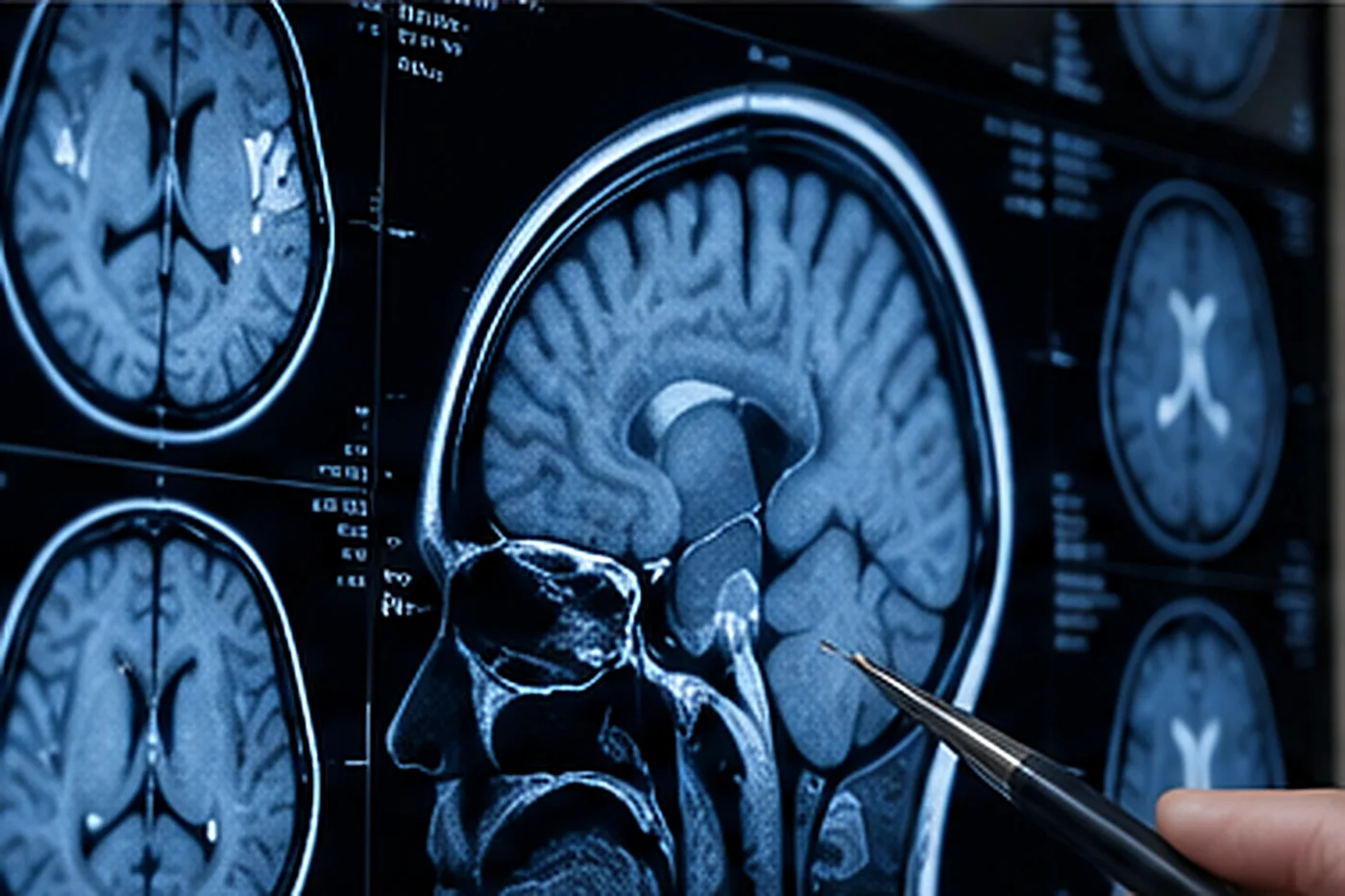
This is where traumatic brain injury cases separate from ordinary injury claims. A head CT is useful for identifying acute structural problems such as intracranial bleeding when imaging is clinically indicated. It is not a test that has to be positive before a mild traumatic brain injury or concussion can exist. The CDC states plainly that a scan of the brain, such as a CT scan, is not needed to spot a mild TBI or concussion. A normal scan therefore does not, by itself, rule one out.
Loss of consciousness is not required either. A mild TBI can involve altered mental status, confusion, disorientation, memory disturbance, or other neurological changes without a blackout. The word “mild” describes the clinical classification of the initial brain injury. It does not mean that every symptom is minor or that recovery will be quick. As the CDC puts it, providers may describe these injuries as mild because they are usually not life-threatening — even so, the effects can be serious.
Timing matters as well. Some symptoms appear immediately. Others are first noticed hours or days later. Headache, dizziness, sleep disturbance, irritability, slowed thinking, memory problems, concentration problems, light or noise sensitivity, and changes in mood or behavior can develop or become apparent over time. A delayed report of a symptom is therefore not the same thing as proof that the symptom did not exist.
Neuropsychological testing can add another layer of evidence. These evaluations can examine memory, attention, processing speed, executive function, problem solving, and other cognitive abilities. The results have to be interpreted in context, including the person’s pre-injury functioning, medical history, emotional factors, and the validity of the testing itself. Neuropsychological testing is evidence, not a substitute for the entire medical record.
That is why baseline proof matters. A person who performed complex work, managed a household, earned consistently strong grades, remembered appointments, handled finances, or functioned independently before the injury may have records and witnesses capable of showing a change that no CT image can display. The strongest brain injury case is not built around a label. It is built around the record.
Some brain injuries produce profound and permanent limitations that overlap with catastrophic injury claims. The pages remain separate because the proof is different. A traumatic brain injury claim requires focused attention to cognition, behavior, neurological evidence, pre-injury function, and the limitations of the tools used to diagnose it.
Michael Rex Stays Involved.
Rex Legal treats a brain injury case as an evidence problem from the beginning: what happened, what changed, how the change can be measured, and what evidence connects the two. Michael Rex remains directly involved in that analysis from evaluation through resolution.
Common Questions About Brain Injury Claims.
Does a normal CT scan rule out a traumatic brain injury?
No. A normal CT scan does not rule out a mild traumatic brain injury or concussion. CT imaging is primarily used to identify acute structural problems such as bleeding when imaging is clinically indicated. A mild TBI is diagnosed from the clinical history, symptoms, examination, and other evidence. A person can have significant cognitive or neurological symptoms without an abnormal CT result.
Do I have to lose consciousness to have a traumatic brain injury?
No. Loss of consciousness is not required for a mild traumatic brain injury or concussion. A person may instead experience confusion, disorientation, memory loss, slowed thinking, dizziness, or other neurological changes. Some people remain awake throughout the incident and still develop substantial symptoms afterward. The absence of a blackout is one fact in the medical history, not a rule that excludes brain injury.
What is neuropsychological testing?
Neuropsychological testing measures areas of cognitive functioning such as memory, attention, processing speed, executive function, language, and problem solving. The results are interpreted alongside medical history, education, prior functioning, emotional factors, and measures of test validity. In a brain injury claim, testing can help document cognitive changes, but it does not replace the medical record, clinical examination, or evidence of how the person functioned before the injury.
How long do I have to file a brain injury lawsuit in Colorado?
The deadline depends on what caused the brain injury and who is responsible. Many Colorado tort claims have a two-year limitations period under C.R.S. § 13-80-102(1)(a), while many motor-vehicle injury claims have three years under § 13-80-101(1)(n). Claims subject to the Colorado Governmental Immunity Act can also require written notice within 182 days under § 24-10-109(1), and failure to comply forever bars the action.
Can I have a brain injury if my symptoms started days later?
Yes. Some traumatic brain injury symptoms appear immediately, while others become noticeable hours or days after the event. Problems with headaches, sleep, memory, concentration, balance, mood, or sensitivity to light and noise can emerge or become more apparent over time. A delayed report of symptoms does not by itself establish or disprove causation; the timing has to be evaluated with the medical history and other evidence.
What if I had a prior concussion or headaches before the accident?
A prior concussion, headache history, or other neurological condition does not automatically defeat a brain injury claim. The important question is what changed. Prior medical records, school records, work performance, testing, and testimony from people who knew the person before the incident can help establish a baseline and distinguish preexisting symptoms from a new injury or an aggravation of an existing condition.
Who pays for medical treatment after a traumatic brain injury?
That depends on how the injury occurred and what coverage exists. Health insurance may pay treatment bills subject to the policy, while liability insurance can become relevant to the injury claim. In motor-vehicle cases, medical-payments coverage or uninsured or underinsured motorist coverage may also apply depending on the policy and facts. Auto Insurance and UM/UIM Claims addresses those issues separately and may provide an injured person with additional insurance coverage.
Can a mild traumatic brain injury cause permanent problems?
Yes. The word “mild” describes the initial clinical classification of the brain injury; it does not guarantee a quick or complete recovery. Many people improve, but some experience persistent problems with memory, concentration, processing speed, headaches, sleep, balance, mood, or other functions. When those limitations become severe or lasting, the resulting claim can overlap with issues addressed in catastrophic injury claims, while the medical proof remains specific to the brain injury.
Tell Us What Happened.
If you or someone in your family sustained a head injury, Michael Rex can review what happened, what medical evidence may matter, and what insurance may apply. Available 24 hours a day, 7 days a week.