

DOG BITE & ANIMAL INJURY CLAIMS
Denver Dog Bite Lawyer
Colorado imposes strict liability for some dog bites, but not for every injury a dog causes.
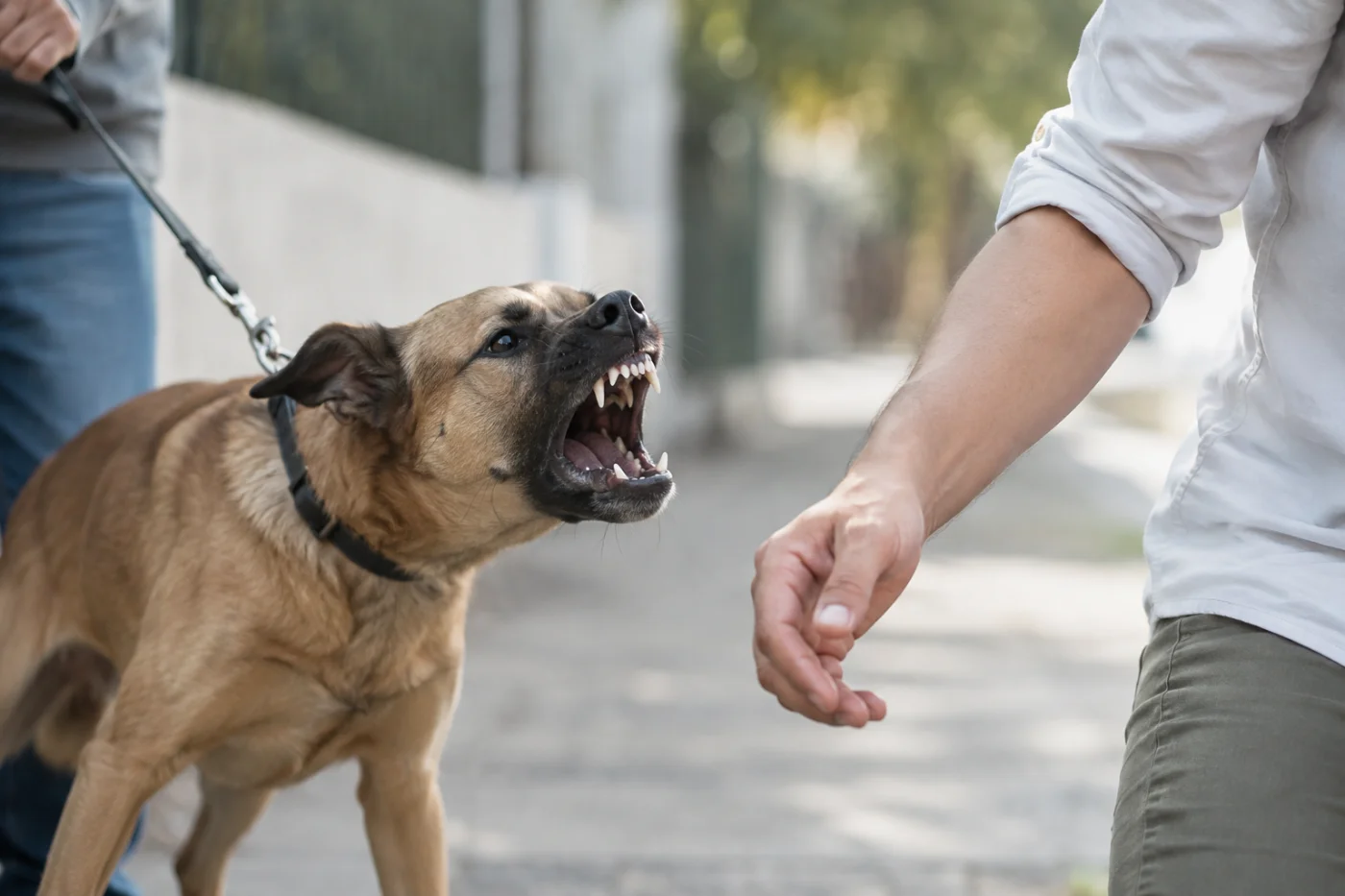
A bite causing serious bodily injury can fall under a statute that does not require proof that the dog was vicious or that its owner knew the dog was dangerous. A lesser bite, a scratch, or an injury caused when a dog knocks someone to the ground follows a different legal route.
That distinction determines what has to be proved and which damages the statutory claim can reach.
Choose the Legal Route.
C.R.S. § 13-21-124 creates a strict-liability claim when a dog bites a person who is lawfully on public or private property and causes serious bodily injury or death. The statute does not require proof of a previous bite, a dangerous propensity, or the owner’s prior knowledge. It defines “dog owner” broadly to include a person or organization owning, possessing, harboring, keeping, having a financial or property interest in, or having control or custody of the dog.
The statute does not create strict liability for every dog-related injury. A person knocked down by a large dog, scratched without being bitten, or bitten without suffering the statutory level of serious bodily injury cannot rely on the strict-liability claim merely because a dog caused the injury.
Other claims may still exist. Section 13-21-124(6) expressly preserves negligence and other legal theories. When negligence is based on a dog’s dangerous or vicious tendencies, evidence that the owner knew or had notice of those tendencies can become central. Other negligence theories may focus on the owner’s conduct in controlling or handling the dog.
Meet the Statutory Threshold.
The strict-liability threshold is “serious bodily injury,” not simply an injury requiring medical treatment. C.R.S. § 13-21-124 incorporates the definition in § 18-1-901(3)(p). That definition includes bodily injury involving a substantial risk of death, a substantial risk of serious permanent disfigurement, a substantial risk of protracted loss or impairment of the function of a body part or organ, and specified injuries including breaks or fractures.
The distinction is easy to miss, because § 13-21-124 separately defines the lower term “bodily injury” to include severe bruising, muscle tears, certain lacerations requiring professional treatment, and injuries requiring corrective or cosmetic surgery. The strict-liability provision uses the higher “serious bodily injury” standard.
The statutory remedy is also narrower than many people expect. A qualifying strict-liability claim permits recovery of economic damages. The statute does not itself award noneconomic damages such as pain and suffering. Because it preserves other causes of action, a qualifying negligence claim can therefore matter even when strict liability also applies.
Check Every Exception.
Strict liability does not apply merely because a qualifying bite occurred. Section 13-21-124(5) contains specific exclusions. They include bites occurring while the person was unlawfully on public or private property; while the person was on the dog owner’s property that was clearly and conspicuously posted “no trespassing” or “beware of dog”; while a peace or military dog was being used in official duties; as a result of knowing provocation; while specified animal professionals were performing their duties; and while a hunting, herding, farm, ranch, or predator-control dog was working under the circumstances described by the statute.
Those are statutory defenses, not general invitations to blame an injured person. Whether an exception actually applies depends on what happened.
Build the Behavior Record.
A negligence claim can make the dog’s history important. Prior bites are obvious evidence, but they are not the only evidence of dangerous tendencies or owner notice. Prior lunging, chasing, snapping, attacks on other animals, complaints from neighbors, warnings to visitors, leash problems, fencing problems, or earlier animal-control contacts can matter depending on the theory asserted.
Animal-control reports should be obtained when they exist. They can identify the dog and owner, preserve witness accounts and owner statements, document previous complaints, and establish what authorities learned after the incident. Quarantine and vaccination records can help confirm the dog’s identity and create another contemporaneous record of the event.
The immediate evidence matters too. Photograph the wounds before they change, the location where the attack occurred, gates or fencing, warning signs, leashes or restraints, torn clothing, and visible blood or damage. Save messages with the owner and contact information for witnesses.
Read the Residential Coverage.
Homeowners and renters liability insurance are common places to look for dog-related coverage, but coverage should never be assumed. Policies can contain animal-liability exclusions, special limits, or provisions affected by a particular dog’s history. If the dog owner is a tenant, the tenant’s renters policy may be more important than the building owner’s insurance.
Colorado has also changed the insurance rules surrounding breed. Colorado law prohibits specified residential insurers from refusing to issue, cancelling, refusing to renew, or increasing premiums based solely on a dog’s breed or mixture of breeds, while permitting different treatment based on a particular dog known to be dangerous or declared dangerous. That rule does not eliminate the need to read the actual liability coverage, exclusions, and limits.
The location of the bite does not automatically decide whose insurance or liability applies. If a tenant’s dog bites someone at an apartment complex, the tenant may be the statutory dog owner while a separate question exists about whether another person legally responsible for the property bears responsibility for a condition that contributed to the attack. Premises liability addresses that separate landowner framework.
Treat Child Injuries Differently.
Children are more likely than adults to be bitten by dogs, and their injuries tend to be more severe. Younger children are particularly vulnerable to injuries involving the face, head, and neck.
That changes the damages record. A facial laceration may require immediate closure, later scar revision, plastic-surgery follow-up, or additional reconstruction as the child’s face grows. Dental injuries, nerve damage, eye injuries, and psychological effects may also require treatment extending well beyond the initial emergency visit.
A traumatic brain injury is a separate category. A child can suffer a traumatic brain injury when a large dog knocks the child onto concrete, or when an attack involves significant force to the head, even where the dog never bites the skull itself.
Use the Two-Year Period.
Colorado’s ordinary limitation period for negligence claims is generally two years under C.R.S. § 13-80-102, which likewise places strict-liability actions under a two-year period. Dog claims therefore do not receive the three-year motor-vehicle period.
A child’s deadline requires separate analysis. Colorado treats a minor under eighteen who lacks a qualifying legal representative as a person under disability under C.R.S. § 13-81-101. Under § 13-81-103, that disability can extend the time to sue, and a person whose disability is removed without a representative having been appointed may generally act within two years after the disability is removed. Appointment of a legal representative changes the calculation. A parent should not assume either that the ordinary two-year deadline controls or that a child’s claim automatically remains open until a particular birthday.
Document Scars and Function.
Dog injuries are not measured by the number of stitches. The record can include infection, nerve or tendon damage, fractures, limited motion, scarring, disfigurement, revision surgery, dental or eye injuries, lost work, and psychological treatment.
Facial scarring deserves documentation over time. Early photographs show the original wound. Later medical records and photographs show how the scar matured and whether additional treatment is recommended. For a child, growth can make future reconstructive questions particularly important.
Permanent physical impairment caused by a severe attack can overlap with the future-care issues addressed in catastrophic injury claims.
Rex Legal Separates the Claims.
Rex Legal begins by determining which legal route actually applies: statutory strict liability, negligence, a separate property claim, or more than one theory. Michael Rex remains directly involved in developing the dog history, the insurance record, the medical evidence, and the damages from evaluation through resolution.
Dog Bite Questions.
Is Colorado a “one-bite” state?
No, not in the sense that a dog gets one free bite. Under C.R.S. § 13-21-124, a qualifying bite causing serious bodily injury or death can create strict liability even if the dog never bit anyone before and the owner had no prior knowledge of dangerous behavior. Prior conduct becomes more important when a claim depends on negligence or dangerous propensities.
What counts as serious bodily injury after a dog bite?
Colorado incorporates the definition in C.R.S. § 18-1-901(3)(p). It includes injuries involving a substantial risk of death, serious permanent disfigurement, protracted loss or impairment of bodily function, and specified injuries such as breaks or fractures. A wound can require professional treatment without necessarily meeting that higher threshold, which is why the medical evidence determines whether the statutory strict-liability claim applies.
What if the dog had never bitten anyone before?
A previous bite is not required for Colorado’s statutory strict-liability claim when § 13-21-124 otherwise applies. The owner can be liable for economic damages regardless of prior knowledge of dangerous propensities. If the claim instead depends on negligence, previous aggressive behavior and what the owner knew or had notice of can become important. A prior bite is evidence of notice, not the only possible evidence.
Does homeowners insurance cover a dog bite?
It often provides a potential source of liability coverage, but no homeowners or renters policy should be assumed to cover a particular attack. The policy may contain animal-related exclusions, limits, or provisions concerning a particular dangerous dog or prior incidents. Colorado now restricts certain breed-based insurance practices, but that does not make every dog-related loss covered. The actual policy language controls.
What if the dog belongs to a friend or family member?
The relationship does not eliminate the claim. Colorado’s dog-bite statute focuses on the injury, the dog owner, the victim’s lawful presence, and the statutory defenses, not on whether the parties are friends or relatives. Insurance also makes the practical claim different from asking someone personally to pay the loss. Homeowners or renters liability coverage should be identified before assumptions are made about who would fund the claim.
How long do I have to file a dog bite claim in Colorado?
Adult dog-bite and ordinary negligence claims generally have a two-year limitations period under C.R.S. § 13-80-102. A child’s deadline can be different, because Colorado’s disability statutes can toll limitations for a minor who lacks a qualifying legal representative. Appointment of a legal representative changes the calculation, so a child’s deadline should be determined under C.R.S. §§ 13-81-101 through 13-81-103 rather than assumed from the adult rule.
What should I do immediately after a dog bite?
Get appropriate medical care, photograph the injuries, identify the dog and owner, save witness information, and report the incident to the appropriate animal-control authority. Preserve damaged clothing and photographs of the location, fencing, gate, leash, or warning signs. Animal-control, vaccination, and quarantine records can later help establish the dog’s identity, the owner’s statements, prior complaints, and what was documented immediately after the attack.
Will the dog be put down if I bring an injury claim?
Not automatically. Filing a civil claim does not itself require euthanasia. Under C.R.S. § 13-21-124(3), in a qualifying serious-bite case a court may order euthanasia on the victim’s motion if the owner had knowledge or notice of the dog’s viciousness or dangerous propensities. Separate animal-control or dangerous-dog proceedings can also affect what happens to the animal, independently of the civil damages claim.
Tell Us What Happened.
If you or your child was injured by a dog, Michael Rex can determine whether Colorado’s strict-liability statute applies, whether a negligence claim also exists, what insurance may respond, and what evidence should be preserved. Available 24 hours a day, 7 days a week.